Live demo: erfesh.github.io/shortlist · Code: github.com/erfesh/shortlist

Job hunting quietly turns into a second job. I had ten career pages open in tabs, I was reading the same postings twice, and every time I found something good I spent an hour guessing whether I was really a fit and rewriting my resume for it.
So in October I built a tool for myself. I called it Shortlist.
The first version was just for me
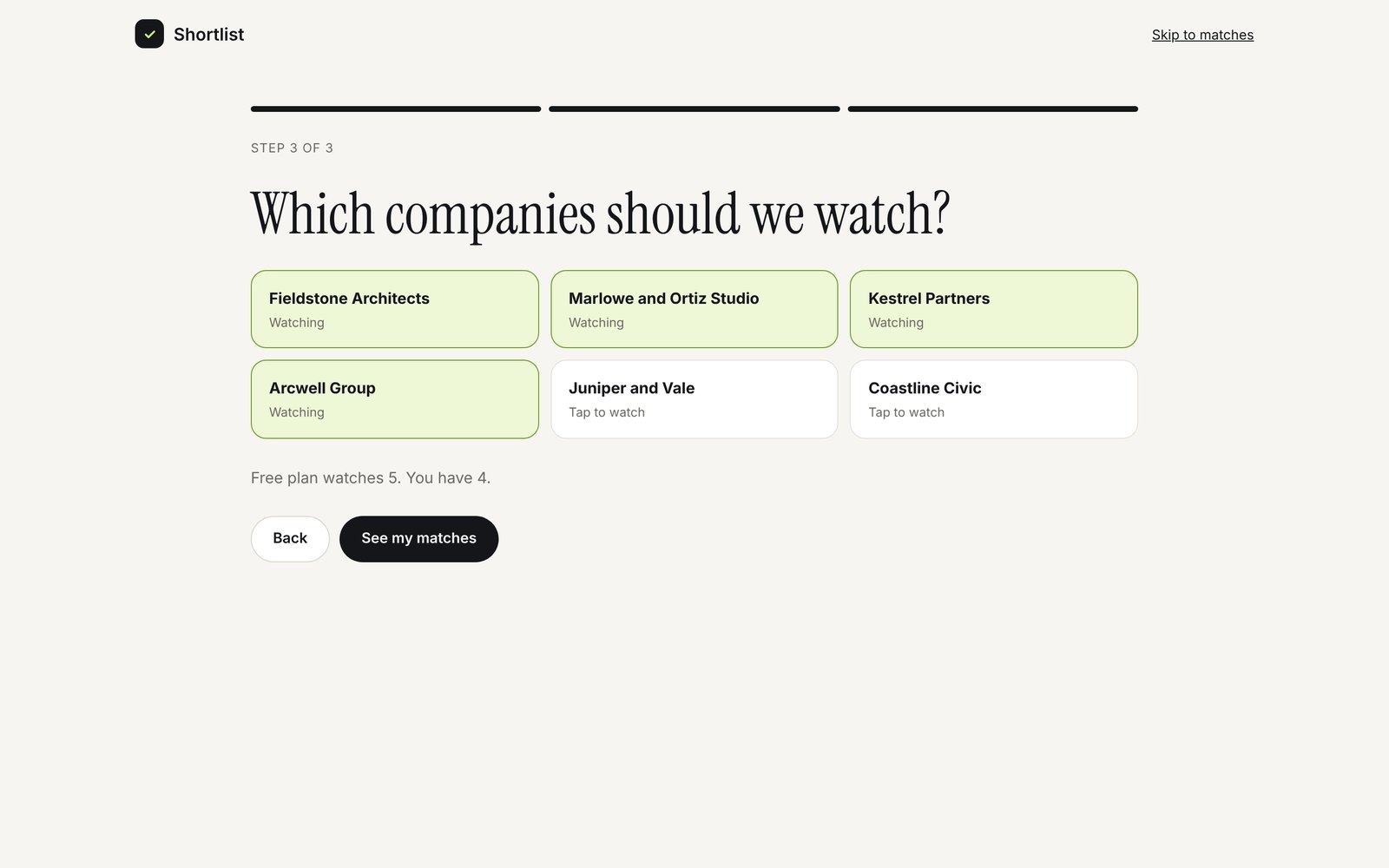
The first version was a single HTML file. I gave it a list of companies I would actually want to join, and it collected their open roles. For each one, it asked AI a single honest question: how well does this person fit this job, requirement by requirement?
Two rules mattered most to me.
The score has to be honest. Every requirement gets marked Strong, Partial or Gap, with the line from my resume that proves it. If I am missing a hard requirement, or the role is a level above or below me, the score gets capped and the tool tells me why. A 90 should mean something.
Nothing gets invented. When Shortlist builds a resume for a role, it only reuses my own lines and reorders them for that job. If it is not on my resume, it does not go in. I have seen enough AI resumes that quietly add skills people do not have.
Later I added a small server version that checks the companies every hour and emails me when a strong match shows up.
Then I asked: what if this was a real product?
The tool worked, but it was built for exactly one person who already knew how it worked. I wanted to see what it would take to make it something anyone could pick up, so I redesigned it end to end: landing page, sign up, onboarding, matches, a tracker, plans and a phone layout.
Not just for designers. I made two sample profiles. Lily Cohen is an architect, and Erik Cohen is a product designer. Seeing the same scoring logic work for a licensed architect looking at cultural projects was the best test that the idea was not only about my own field.
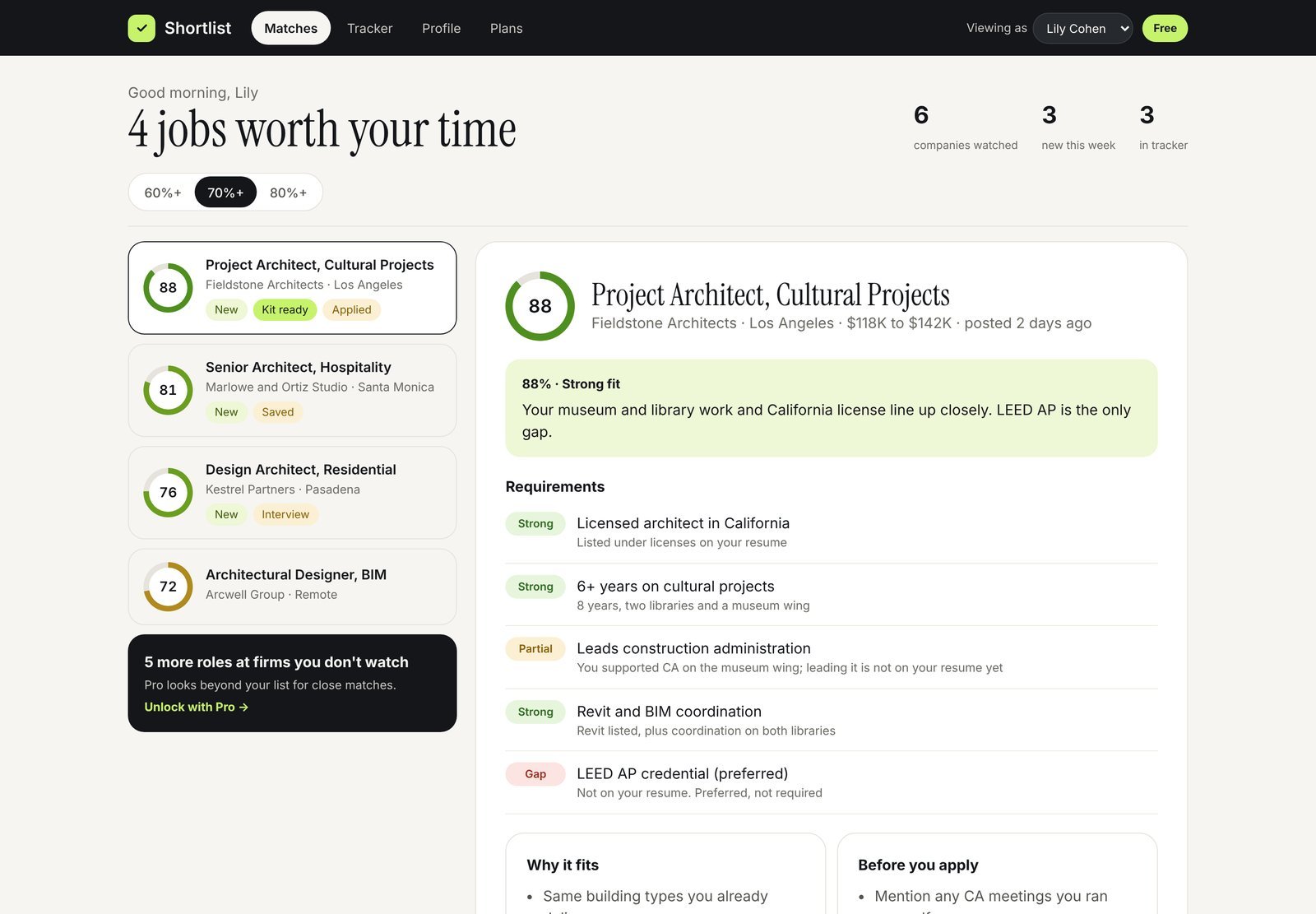

Sign up in seconds. A short form, plus the option to jump straight into a sample profile and look around first.
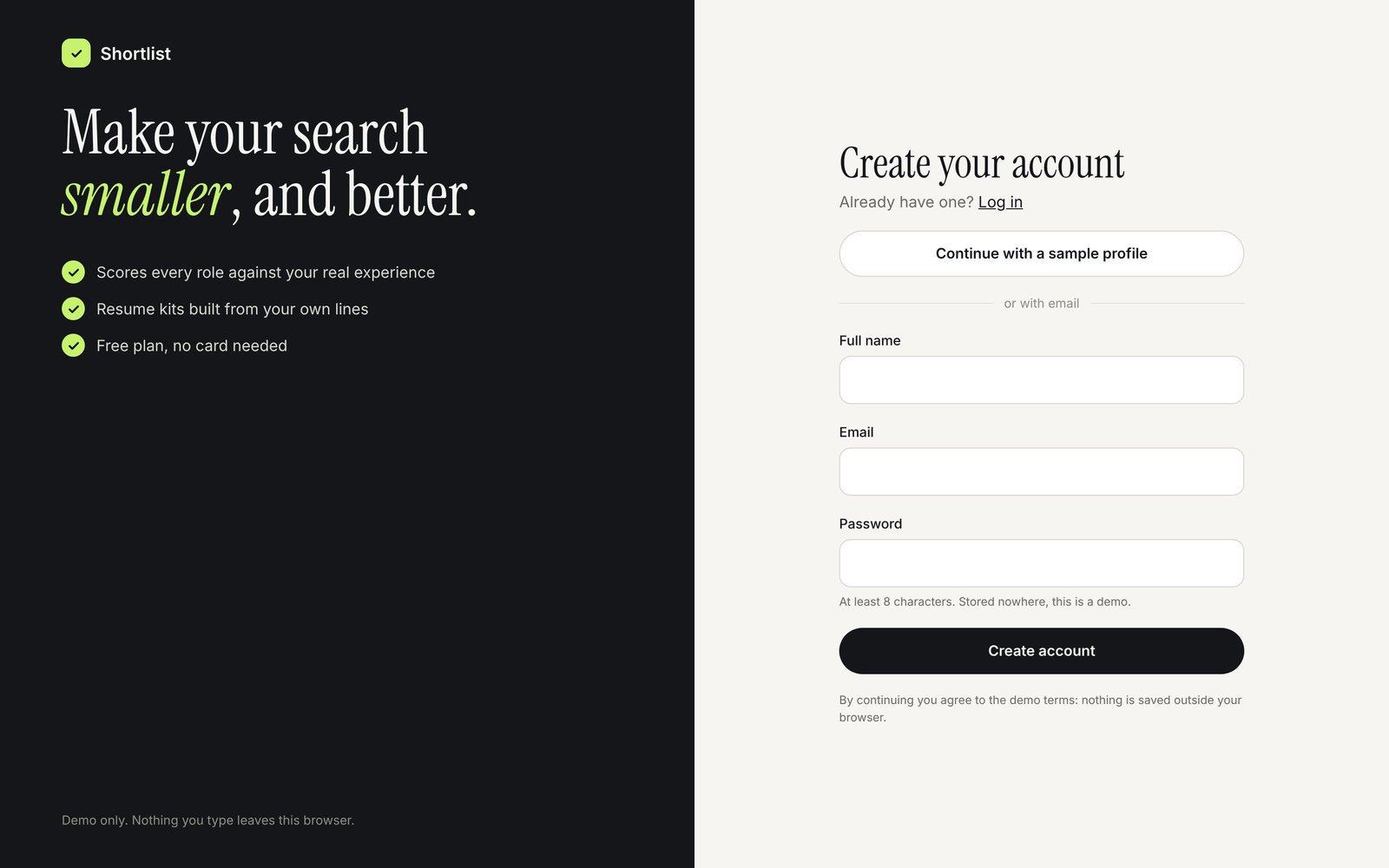
Onboarding in three steps. Add your resume, pick the roles you want, pick the companies to watch. That is it.
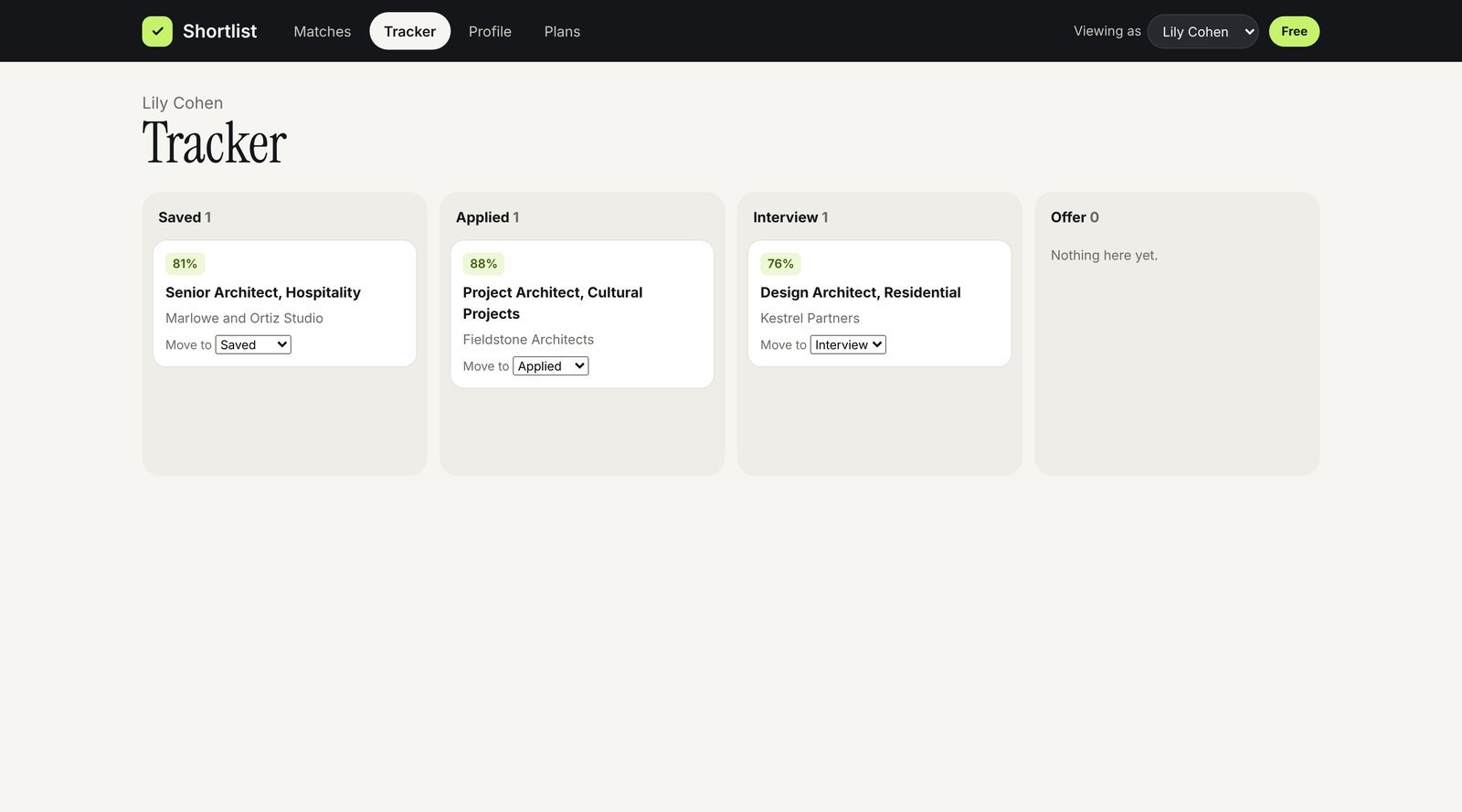
A simple tracker. Saved, Applied, Interview, Offer. No spreadsheet needed.
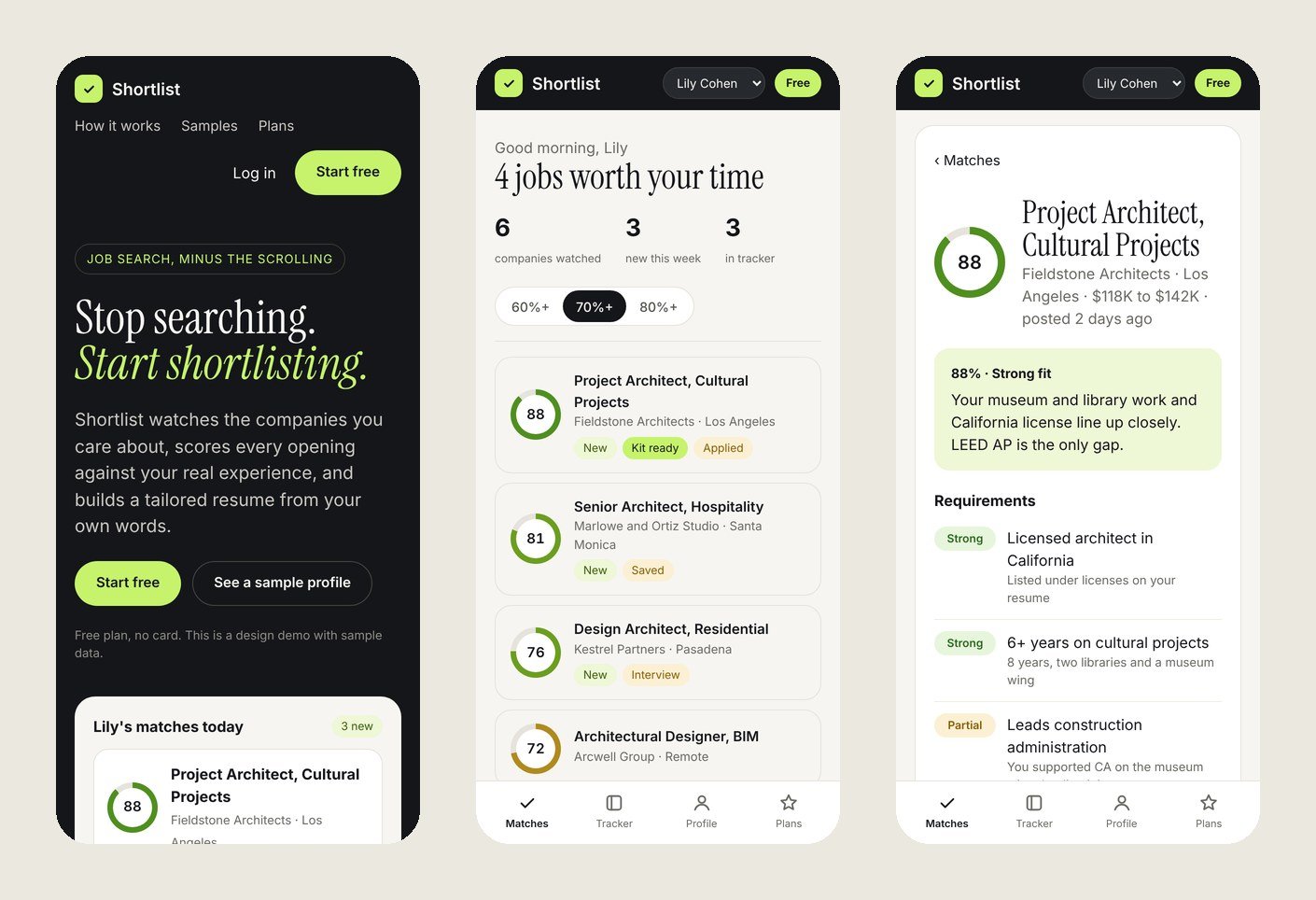
Phone first where it counts. Most people check job alerts on their phone, so the phone layout gets bottom tabs, a list that opens into a full screen job view, and big tap targets.
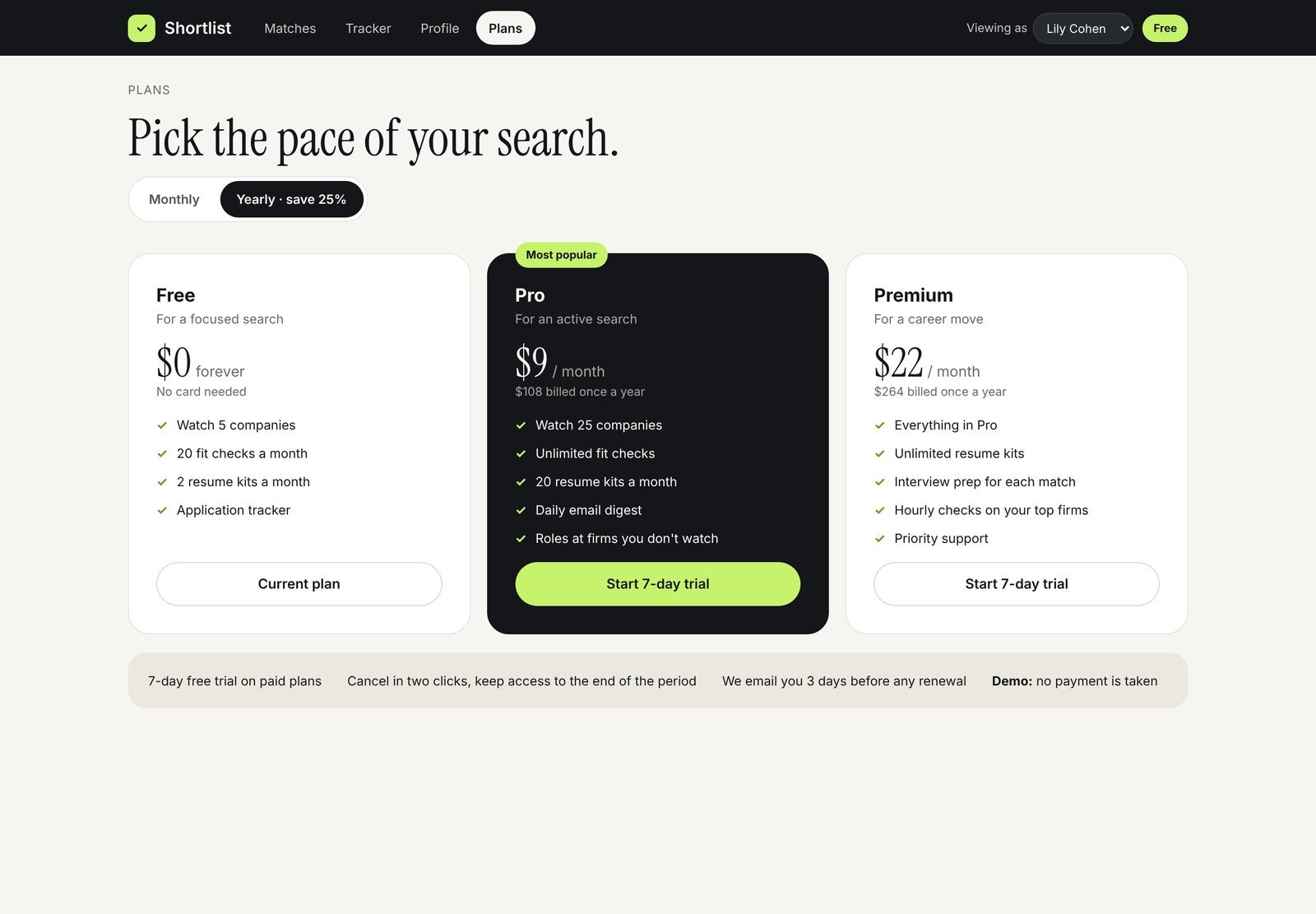
Plans that respect people. I designed Free, Pro and Premium tiers. The free plan is actually useful on its own. Paid plans come with a 7 day trial, a clear note that we would email you before any renewal, and cancel in two clicks. Job seekers are often stressed about money, so surprise charges felt like the worst possible design choice here.
What I learned
The hardest design problem was not the layout. It was trust. People need to believe the score, so every number has the evidence right next to it. People need to believe the resume, so it never says anything they did not say first. And people need to stay in control, so Shortlist never applies for you. You review everything and hit send yourself.
Try it
The live demo runs entirely in your browser with sample data. Sign up and log in are simulated, AI is switched off, and the people and companies are fictional. You can switch between Lily and Erik, move jobs through the tracker, and try the plans.